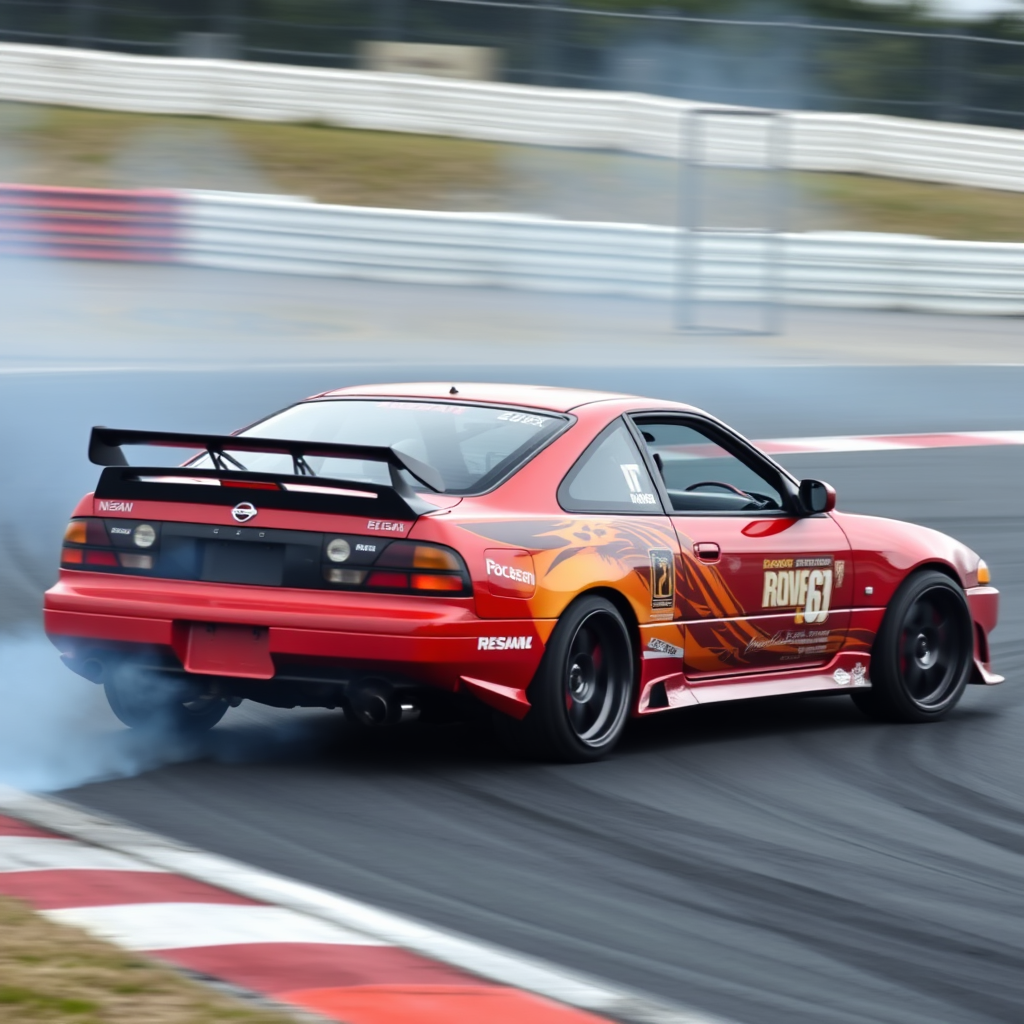
Why Drift Cars Are Hard to Insure
A drift car is a standard auto insurer's nightmare checklist: roll cage, performance modifications, salvage or rebuilt title, high-horsepower engine swap, stripped interior. Any one of these features might cause a standard carrier to decline coverage. All of them together means standard markets won't touch it.
This isn't arbitrary. Standard auto insurance is actuarially designed around stock vehicles used for commuting and occasional recreation. A caged SR20DET-swapped S13 with a rebuilt title is outside every parameter those models were built for. Standard carriers don't decline drift cars out of malice — they genuinely don't have a product designed for them.
Specialty agreed value insurance for modified vehicles is the correct product. Here's how it works for drift builds specifically.
The Three Drift-Specific Insurance Problems
Problem 1: The Roll Cage
A roll cage is an automatic decline signal in most standard underwriting systems. When you report "bolt-in roll cage" or "custom tube cage" on a standard application, the system flags "motorsport use" and the underwriter declines. Even bolt-in safety cages — which are sometimes marketed as street-legal — create underwriting problems at standard carriers.
Why? Because roll cages are almost exclusively installed for motorsport use. Underwriters know this. A caged vehicle, in their model, is a track car — and track use is excluded from standard auto policies.
Specialty carriers who work with modified vehicles understand that a street-legal drift car with a bolt-in cage is not the same insurance risk as a purpose-built competition car that never leaves the track. They have underwriting frameworks that distinguish between these uses, and they'll insure the street-driven drift car with a cage at agreed value.
Problem 2: The Salvage or Rebuilt Title
Many drift cars start as wrecked vehicles purchased at salvage auction — a crumpled S13, a flood-title 240SX, a low-speed-impact-totaled 350Z. The chassis is solid, the engine is healthy, and the damage is cosmetic or repairable. You buy it, fix it, get a rebuilt title inspection, and build your drift car on the rolling shell.
Standard carriers decline salvage and rebuilt title vehicles almost universally. Their claims experience with salvage vehicles has taught them that unknown prior damage creates unpredictable future claims. Whether or not that's fair for a documented rebuild, it's the standard market reality.
Specialty carriers who specialize in modified and enthusiast vehicles have programs for rebuilt title cars. What they need:
- Rebuilt title inspection certificate: Your state's DMV process for certifying a rebuilt salvage vehicle. This is the key document.
- Repair documentation: What was done to bring the car from salvage to rebuilt status. Photos, receipts, shop invoices.
- Photos of the car as it is now: Exterior, interior, engine bay, undercarriage if applicable.
With proper documentation, a rebuilt title drift car can be insured at agreed value by the right specialty carrier.
Problem 3: The Engine Swap
SR20DET, 2JZ-GTE, LS3, RB26DETT — the engine swap is fundamental to drift culture, and fundamentally incompatible with standard auto insurance.
Standard policies insure the vehicle as built. An engine swap means the car's stated horsepower, displacement, and mechanical configuration no longer match what the VIN was originally associated with. If you have an engine swap and file a claim without disclosing it, the carrier can deny the claim on material misrepresentation grounds.
Specialty agreed value coverage handles engine swaps by treating the vehicle as what it actually is — not what the VIN originally was. The swap is disclosed upfront, its value is included in the agreed value, and there's no misrepresentation issue.
Documentation for a Drift Build
The agreed value process starts with documentation. For a drift build, here's what to collect:
Build list or spreadsheet: Every significant modification, the cost, and whether it was professional installation or DIY. Engine, transmission, suspension, cage, safety equipment, bodywork. Include part costs and shop labor separately.
Shop receipts and invoices: Professional engine build receipts, cage fabrication invoices, suspension installation, bodywork. These are the strongest documentation of installed value.
Parts receipts: Amazon orders, vendor invoices (Mishimoto, Greddy, HKS, BC Racing, etc.), receipts from retailers. Even DIY parts need to show you paid for them.
VIN and title documentation: For rebuilt titles, the rebuilt title certificate and the inspection certificate. Both matter.
Photos: Build progress photos if you have them, plus current exterior, engine bay, interior, and undercarriage. Date stamps on photos help establish the build timeline.
Estimated current value: Your best estimate of what a buyer would pay for the car in its current build state. This is the starting point for negotiating agreed value.
You don't need a perfect paper trail before calling. We work from what you have and help you fill gaps.
What Drift Car Insurance Actually Covers
Agreed value: The agreed amount paid if the car is totaled. No depreciation, no ACV dispute.
Comprehensive: Theft, fire, vandalism, weather damage. If someone breaks into your garage and steals your drift car, comprehensive pays the agreed value (minus deductible).
Collision: Damage from impact on the street — another car, a guardrail, a pole. Collision does NOT apply on track (see below).
Transit to events: Your drift car is covered while being loaded and transported on a trailer to an event. If you're in an accident on the highway en route to a drift event with the car on a trailer, collision coverage applies.
Paddock and pit area: While you're at an event but not on track — car in the paddock, loaded on the trailer, in the staging area — comprehensive coverage applies. If someone hits your parked car in the paddock, it's a collision claim.
What Drift Car Insurance Does NOT Cover
On-track use: Once you're on the drift course or circuit, your drift car insurance policy does not cover you. The on-track exclusion is clear in every standard and specialty auto policy.
This includes: - Practice runs - Competition rounds - HPDE sessions - Test and tune events on a closed course
If you spin into a wall at a drift event, the repair comes out of your pocket. On-track physical damage coverage for motorsport events is a separate, event-specific or annual product from providers like Lockton Motorsports and Competition Insurance Associates.
Mechanical failure: If your clutch fails, your driveshaft explodes, or your engine throws a rod on the street — mechanical failure is not an insurance claim. Insurance covers sudden, accidental, and external events — not mechanical breakdown.
Racing fuel and fluids: Some specialty carriers exclude damage from running nitrous, methanol, or other non-standard fuels. Know your policy language.
How Much Does Drift Car Insurance Cost?
Agreed value specialty coverage for drift cars depends on:
- Agreed value: The total insured value. A $15,000 build costs less to insure than a $45,000 build.
- Use: Storage-only, weekend street use, or regular driver each have different rate treatments. Pure show/storage rates are lowest.
- Your driving history: Standard underwriting criteria apply.
- Title status: Rebuilt titles may carry a surcharge vs. clean title vehicles.
Rough ranges: - $10,000–$20,000 build value, storage/show use: $400–$800/year - $20,000–$40,000 build value, weekend street use: $700–$1,400/year - $40,000+ build value or daily driver: Varies significantly by driver profile
Getting a firm quote requires 15–20 minutes with an agent who will ask about the build in detail. Call 844-967-5247 to start.
The Paddock-to-Street Gap: Planning Your Coverage Stack
For serious drift competitors, the ideal coverage stack is two layers:
Layer 1 — Specialty agreed value policy: Covers the car from your garage, to the highway, to the paddock, and back. All the time the car is not actively on a course.
Layer 2 — Event physical damage coverage: Covers the car while you're actively on the drift circuit. Available per event or as an annual motorsport policy.
Together, these two layers provide complete coverage. The specialty agreed value policy handles everything off-track; the event policy handles on-track. There's no gap.
If you only compete occasionally, per-event coverage is economical. If you run 8–12 events per year, an annual motorsport policy becomes more cost-effective. Ask us to help you figure out the right approach for your competition schedule.
Getting Started
Getting drift car coverage requires a conversation, not just an online quote form. Bring:
- Year, make, model, VIN
- Title status (clean, salvage, rebuilt)
- Description of the build (a list of major mods is enough to start)
- Estimated total value of the build
- How you use the car (storage only, street, events)
Call 844-967-5247 or request a quote and we'll take it from there.