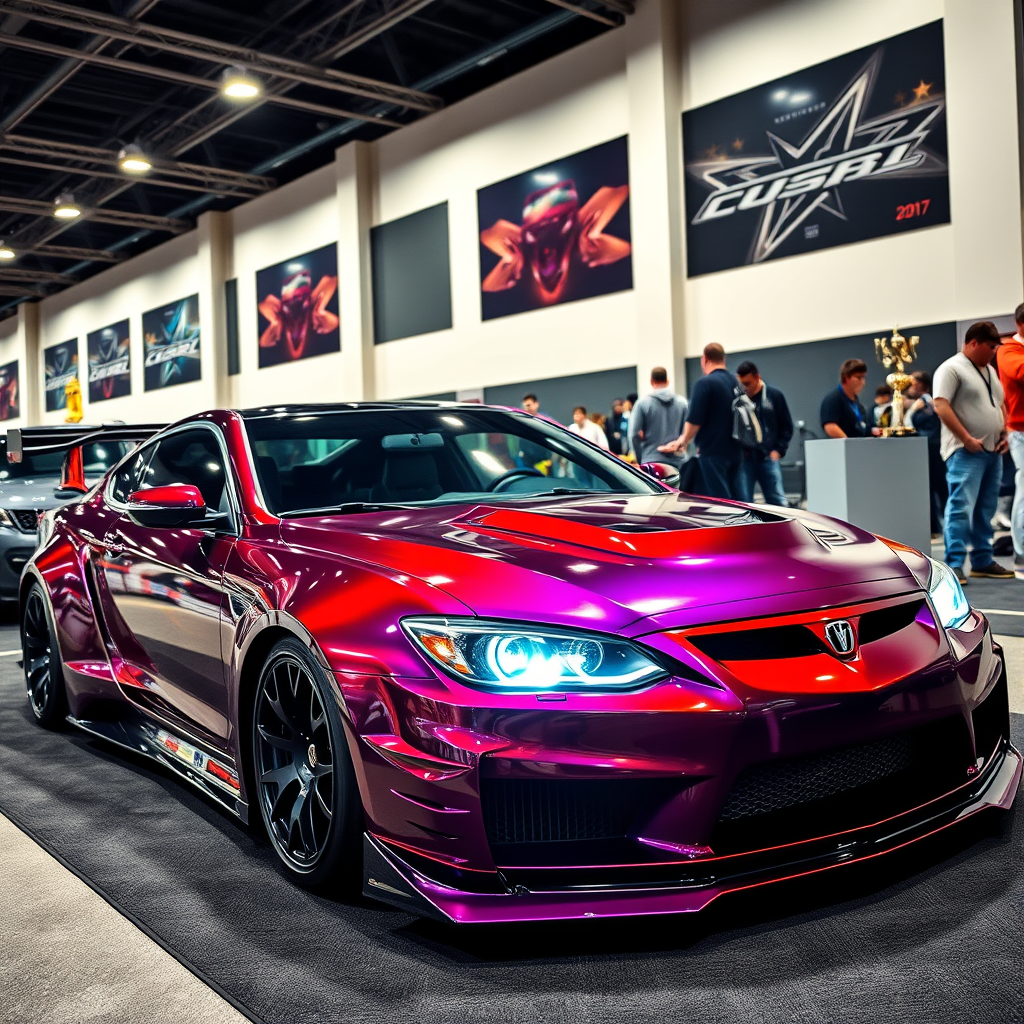
The Show Car Insurance Problem
You spent $12,000 on a full custom paint job. Three months of body prep, panel alignment, primer, basecoat, clear. The painter won an award with the finish. You've won two trophies with the car.
Your standard auto insurance company values your 1969 Camaro at $22,000 — the average sale price of a comparable stock car with average paint. Your custom paint alone is worth more than half that number. And the car's total build investment — including the paint, the resto, the new interior, the engine rebuild — is probably three times what your insurance company thinks the car is worth.
This is the show car insurance gap. The car exists as something far more valuable than its base vehicle — but standard ACV policies price off the base vehicle.
Why ACV Doesn't Work for Show Cars
Actual cash value (ACV) is the market value of a comparable vehicle at the time of loss. For a stock 1969 Camaro SS, ACV is based on what other stock Camaro SHs sell for. Your custom paint, ground-up restoration, and $40,000 in documented modifications are not factored in.
When your show car is totaled — even on a good ACV policy — you lose everything you've invested above the stock market value. The settlement is real for someone who owns a stock car. For a show car, it's a fraction of what the car represents.
Stated value is better than ACV but not the best. Stated value policies pay the lesser of the stated value or ACV — meaning if ACV happens to be lower than your stated value (which it will be for most show cars), you still get ACV.
Agreed value is the correct answer. You and the insurer agree on the value before any loss — including all modifications, the restoration investment, and the custom work. Agreed value pays that number in full if the car is totaled. No ACV calculation. No negotiation.
What Needs to Be Included in Your Show Car's Agreed Value
A show car's agreed value is its total build investment from all sources:
Vehicle acquisition cost: What you paid for the base vehicle.
Restoration work: Frame-off restorations, metal work, rust repair, chassis work. Professional shop restoration charges are often $10,000–$60,000+ for comprehensive restorations.
Paint: Custom paint is the biggest single modifier of value on many show cars. A quality single-color show quality finish: $6,000–$15,000. Custom airbrushed artwork, candy colors, multi-stage work: $15,000–$50,000 or more. Every detail of the paint job should be documented with the painter's invoice.
Body modifications: Custom bodywork, panel modifications, shaved door handles, smoothed engine bay, tube front or rear, rotisserie work, custom fabrication.
Powertrain: Engine rebuilds, upgraded carbs or fuel injection, transmission rebuilds, driveline work.
Interior: Custom upholstery, billet accessories, aftermarket gauges, complete interior restorations. Show-quality interiors can run $5,000–$25,000+.
Audio and accessories: High-end stereo systems, custom speaker enclosures, dashboard work.
Wheels and tires: Show-quality custom wheels are often $2,000–$8,000+.
Add all of these up and you have your documentation baseline for agreed value.
How to Document a Show Car for Insurance
Show car documentation is about establishing credibility for the agreed value. The stronger your documentation, the more confidently the agreed value is set — and the smoother a claim goes if you ever need to file one.
Professional appraisal: For high-value show cars — especially cars at or above $50,000 total investment — a professional appraisal from a certified automotive appraiser who specializes in collector and custom vehicles is the gold standard. Appraisal costs are typically $200–$500 and are worth every dollar.
Build receipts and invoices: Painter's invoice, shop restoration invoices, parts receipts. These establish that you actually paid what you claim.
Show trophies and records: While not dollar documentation, show results validate the quality of the build. A car that's won Best Paint at several shows is not a backyard paint job.
High-quality photographs: Professional-grade photos of the exterior, interior, engine bay, and undercarriage. Document the finish quality in detail. Show-quality photography serves double duty — it establishes the condition and quality at the time of insuring.
Maintenance records: Some underwriters want to see that the car is maintained and stored properly. Keep records of storage location and care.
Transit and Show Coverage: What You Need at Events
Getting your show car to an event involves coverage exposures that agreed value policies handle well.
Transit to events: Whether you trailer the car to shows or drive it, comprehensive and collision apply during transit. If you're in a highway accident and your show car on the trailer is destroyed, the agreed value pays.
At the event: While your car is on display, comprehensive coverage applies. Vandalism at a show (rare but real), weather events, fire from another exhibit — these are comprehensive claims under your agreed value policy.
Certificates for shows: Some concours events, prestigious car shows, and exhibition venues require proof of insurance for exhibitors. We issue ACORD certificates same-day. If you're going to a show that requires proof of insurance and need a certificate fast, call us.
Security while on display: Agreed value covers theft whether the car is in your garage or at a car show. If someone steals a component from your show car while it's on display, comprehensive covers it at the agreed value calculation.
Limited Use and Storage Rates
Show cars often drive low annual mileage — seasonal driving, trailer-to-show-only, or pure storage. Low mileage and limited use translate to lower premiums.
Trailer queens: Cars that are never driven on public roads and only transported on trailers get the lowest rate treatment — essentially storage coverage with transit endorsements.
Seasonal drivers: Cars driven a few months per year can often be rated for limited mileage.
Storage only (off-season): Some policies allow reduced coverage during winter storage months when the car is garaged and not being used.
If your show car doesn't see daily street use, make sure you're being rated appropriately — not at full driver rates for a car that sits in a climate-controlled garage 10 months of the year.
Show Car vs. Collector Car vs. Antique Coverage
There's overlap between show car, collector car, and antique/classic car insurance, but they're not identical:
Antique/classic car insurance (Hagerty, Grundy, American Collectors) is specifically designed for collector vehicles with agreed value. These are excellent products for original or resto-spec vehicles that meet their eligibility criteria. Most require the vehicle to be over a certain age (typically 15–25 years), stock or period-correct, and used only for shows and occasional pleasure driving.
Show car insurance via specialty markets covers vehicles that may be newer, more heavily modified, or don't meet classic carrier criteria — but still need agreed value protection for a significant build investment.
Modified vehicle specialty coverage is what we do — it works for show cars regardless of whether they meet classic car program criteria. If your show car has modern mechanicals, unconventional modifications, or doesn't meet the mileage and use restrictions of classic car programs, specialty modified vehicle coverage is the right product.
Getting a Show Car Insurance Quote
To get a show car quote, prepare:
- Year, make, model
- Total build investment (rough estimate to start; we'll refine from documentation)
- How the car is used (trailer queen, seasonal driver, storage only)
- Where the car is stored (garage, climate-controlled storage, covered outdoor)
- Any professional appraisals already in hand
- High-quality photos if available
Call 844-967-5247 or request a quote online. We specialize in modified and custom vehicles — we understand what your build represents and we'll place it correctly.