The Problem with Standard Auto Insurance for Modified Cars
Here's the scenario every builder dreads: you've put $30,000 into a build over three years. New motor, suspension overhaul, custom wide body, full respray in a color that took six months to pick. Someone t-bones you at an intersection. Your car is totaled.
Your insurance company sends an adjuster. They look up the car's VIN — a 2003 Nissan 350Z — and come back with a settlement: $6,800. That's what a stock 2003 350Z in average condition is worth in their system. Your $30,000 in modifications? Not their problem.
This happens constantly to modified car owners who don't know that standard auto insurance was designed for stock vehicles. If you've significantly modified your car, you need specialty modified car insurance with agreed value — or you're carrying a policy that protects almost none of your actual investment.
What Agreed Value Coverage Actually Means
Agreed value is simple: you and the insurance company agree on what your car is worth — including modifications — before you buy the policy. That agreed number is documented in your policy declarations. If the car is totaled in a covered loss, you get that number. No negotiation, no ACV calculation, no depreciation fight.
Contrast that with actual cash value (ACV), which is what standard policies pay. ACV is the market value of the vehicle at the time of loss — based on comparable stock vehicles in your area. For a modified car, ACV ignores:
- Every dollar you spent on performance parts
- Engine work, transmission work, suspension
- Bodywork, paint, and custom fabrication
- Interior modifications
- Safety equipment you installed
ACV coverage on a modified car means you're paying premiums on a policy that protects a fraction of what you own. Agreed value coverage is the correct product for any seriously modified vehicle.
What "Seriously Modified" Means
There's no universal threshold, but here are the markers:
Total modification value over $5,000: At this point, standard CPE (custom parts and equipment) riders on standard policies are unlikely to cover you adequately. Most cap at $1,500–$5,000.
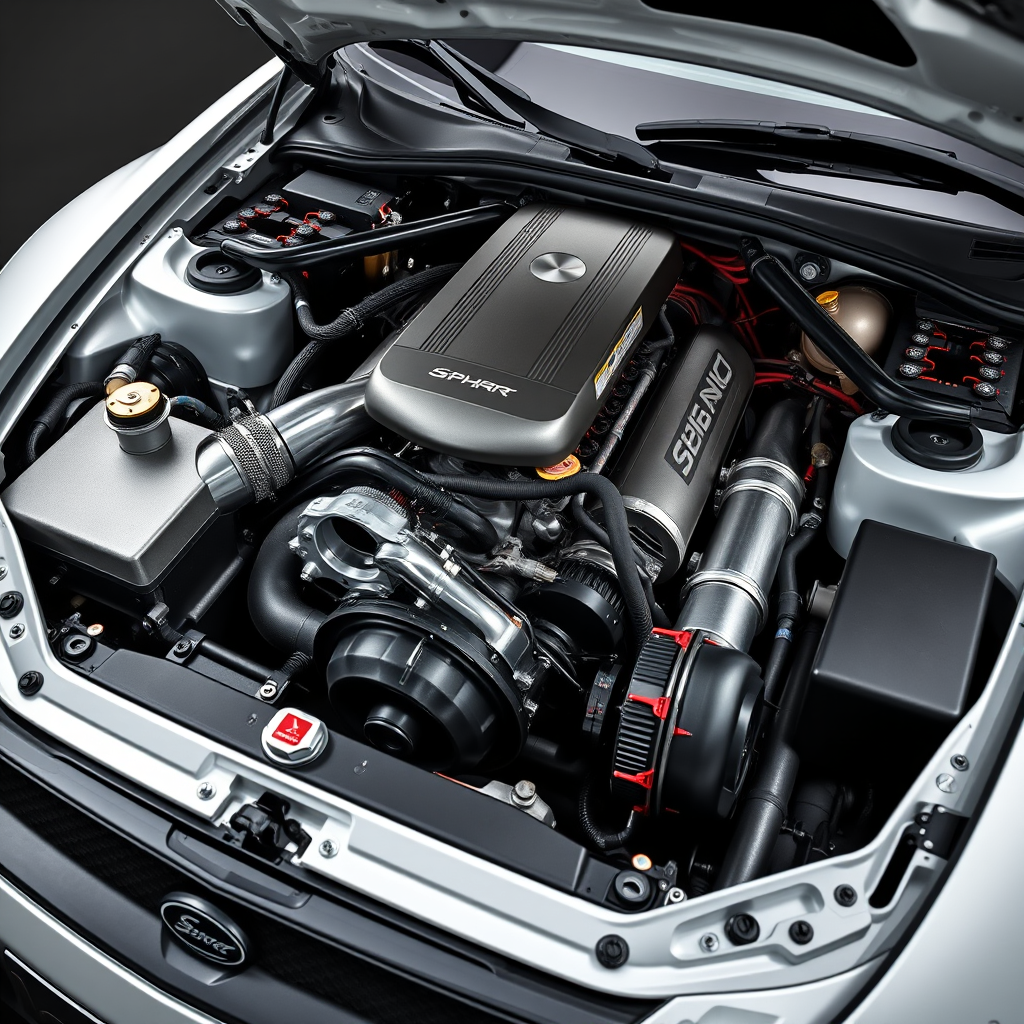
Performance modifications: Turbo kits, superchargers, engine swaps, forced induction systems, big brake kits, standalone ECUs. These change both the performance and the insurance risk profile of the vehicle.
Caged vehicles: If you've installed a roll cage, you've likely been declined by standard carriers already. Roll cages flag a vehicle for motorsport use in underwriting systems.
Salvage or rebuilt titles: Common in drift and motorsport builds where vehicles are purchased wrecked. Standard carriers often decline these outright.
Custom paint or bodywork: A world-class paint job, wide-body conversion, or full respray in a non-stock color represents significant value that ACV will never account for.
If any of these apply, you need specialty agreed value coverage.
The CPE Rider Trap
Many standard carriers offer a custom parts and equipment (CPE) rider. GEICO's standard limit is $1,500. Progressive's is $5,000 with an optional upgrade. State Farm's riders vary by state.
The problem is the math. A basic wheel and tire set: $3,000. A turbocharger kit: $4,000. An exhaust: $1,200. A coilover kit: $2,500. That's $10,700 — already double a $5,000 CPE limit — and we haven't touched engine internals, bodywork, paint, or an interior.
For a car with $10,000 or more in aftermarket parts, CPE riders don't solve the problem. They give the appearance of coverage while leaving the bulk of your investment exposed.
The right solution for a heavily modified car is an agreed value policy that incorporates the total build value — not a standard policy with a CPE rider bolted on.
How to Value Your Modified Car for Insurance
The agreed value process starts with a conversation and documentation. Here's what you need:
Build receipt or parts list: A document — even a spreadsheet — listing all significant modifications with costs. Engine parts, suspension parts, bodywork costs, wheels, tires, interior work. Include shop labor separately.
Shop invoices: If you've had work done professionally, keep the invoices. They're the most credible documentation of installed value.
Purchase receipts for parts: Amazon orders, vendor invoices, receipts from car parts retailers. Even if you installed them yourself, the receipts document what you paid.
Professional appraisal: For high-value builds — especially show cars — a professional appraisal from an automotive appraiser who specializes in modified or collector vehicles can establish agreed value with the strongest possible documentation.
Photos: Document the build. Exterior, engine bay, interior. Date-stamped photos help establish the build state at the time the policy is written.
You don't need to have all of this perfectly organized before calling. We work from what you have and help you build documentation that supports the agreed value we establish.
What Specialty Carriers Actually Cover
Specialty agreed value policies for modified vehicles typically cover:
Collision and comprehensive: The core coverages — damage from accidents (collision) and all other perils like fire, theft, vandalism, hail, and flooding (comprehensive). Both applied at the agreed value.
Engine and drivetrain modifications: Turbochargers, superchargers, intercoolers, intakes, exhausts, engine internals, transmission upgrades. These need to be disclosed and included in your agreed value.
Suspension and chassis: Coilovers, air suspension, airbag setups, angle kits, hubs, knuckles, sway bars, subframe reinforcements.
Bodywork and exterior: Wide-body kits, aero components (splitters, diffusers, wings), custom bumpers, carbon fiber components, wraps, vinyl graphics.
Custom paint: If your paint represents significant investment, document it and include it in your agreed value. Custom paint, candy colors, metal flake, airbrushed artwork, specialty clear coats.
Interior modifications: Racing seats, harnesses, aftermarket dashes, roll cages, fire suppression systems, aftermarket steering wheels and shift knobs.
Wheels and tires: Aftermarket wheels and tires beyond OEM specifications are coverage items — especially high-end wheel sets.
The On-Track Exclusion (Read This)
Specialty agreed value policies for modified cars are NOT track day policies. This is an important distinction.
Every standard and specialty modified car policy includes an exclusion for use on a racetrack, closed course, or in competitive events. This typically includes HPDE (High Performance Driving Education) events — even though they're instructional, not racing.
What this means practically: - Street driving: Covered. - Transport to/from a track event: Covered. - Paddock and pit area: Covered (including comprehensive — fire, theft). - On track during HPDE or open track session: NOT covered.
For on-track physical damage protection, separate event-specific or annual HPDE policies exist from providers like Lockton Motorsports and Competition Insurance Associates. These layer on top of your agreed value policy, not replace it.
If you use your modified car on track regularly, ask about the full coverage stack you need — agreed value for off-track and event coverage for on-track use.
Drift Cars and Salvage Titles
Drift cars present two specific underwriting challenges: roll cages and salvage titles.
Roll cages: Most standard carriers decline caged vehicles automatically. A bolt-in cage triggers motorsport-use flags in underwriting systems. Full tube cage fabrications — purpose-built for competition — are even harder to place with standard markets. Specialty carriers handle them, with proper disclosure.
Salvage titles: Many drift builds start as wrecked vehicles purchased at salvage auction, then rebuilt. Salvage and rebuilt titles are declined by most standard carriers. Specialty markets have programs for rebuilt title vehicles with documented repair histories, rebuilt title inspection certificates, and photos.
The combination of a caged, rebuilt-title drift car is difficult to place but not impossible. We work specifically with markets that handle these vehicles.
How to Get a Quote
Modified car insurance quotes require more information than a standard auto quote. Plan to provide:
- Year, make, model, and VIN
- Estimated total value (vehicle purchase price + all modification costs)
- How the car is used (daily driver, weekend/show only, stored)
- Annual mileage estimate
- List of significant modifications (a build list or spreadsheet works)
- Your driving history (standard underwriting requirement)
- Title status (clean, salvage, rebuilt)
Most quotes for modified vehicles take 24 hours or less. Call 844-967-5247 or request a quote online — we'll walk through your build and find the right coverage.
Common Mistakes to Avoid
Not disclosing modifications: If you don't disclose a modification and there's a loss, the carrier can argue that the undisclosed modification affected their risk and deny the claim. Full disclosure is essential.
Accepting ACV on a modified car: If a carrier offers you an ACV policy for a heavily modified vehicle, push back. ACV means you get the stock vehicle's depreciated value — not what your car is worth.
Assuming your current policy covers modifications: Many owners discover they have inadequate coverage when they try to make a claim. Call your insurer and ask specifically: "Does my policy cover aftermarket modifications, and at what limit?" The answer will often surprise you.
Not updating coverage when adding mods: A policy written when your car had $15,000 in mods doesn't automatically update when you spend another $8,000 on a motor build. Contact us when you make significant additions.
The Bottom Line
Modified car insurance isn't complicated — but it does require working with the right specialist. The standard personal auto market wasn't designed for your build, and trying to shoehorn an agreed value situation into a standard ACV policy ends badly when it matters most.
If your car has significant modifications, the right coverage is an agreed value policy from a specialty carrier who understands modified vehicles. That's what we do.
Call 844-967-5247 or request a quote to get started.